
Spray vs Brush Finishes for Cabinet Painting in Fremont
Spray vs brush cabinet painting Fremont: Learn the finish, cost, and durability differences before updating your cabinets.

Exterior House Painting Services help Fremont homeowners protect their homes, improve curb appeal, and extend exterior paint life.
Your home’s exterior takes a beating. Sun, fog, rain, and temperature swings wear down paint every day. In Fremont, we see it all. Homes in Ardenwood bake in the afternoon sun. Properties near the Baylands are affected by salt air and moisture. Older homes in Niles and Centerville have layers of paint going back decades.
When it’s time to repaint, you need a contractor who understands these challenges. Fremont Painting Pros has been handling exterior house painting across Fremont since 2021. We also provide roof painting, vinyl and aluminum siding painting, and commercial painting for small buildings. This guide covers everything you need to know about exterior painting in Fremont.

When you hire a pro for exterior house painting in Fremont, you’re getting more than just a fresh coat of color. The job starts with a full walk-around of your home. Your painter checks for cracks, peeling, wood rot, and areas where old caulk has failed. Then comes cleaning. Most homes need pressure washing to remove dirt, mildew, and loose paint. After that, damaged areas get repaired. Holes get filled. Rotted wood gets replaced.
Finally, masking tape and drop cloths protect windows, doors, and landscaping before any paint goes on. A full exterior paint job covers your siding, trim, fascia boards, soffits, window frames, doors, shutters, and sometimes your garage door. Some homeowners also add roof painting or deck staining to the project.
Exterior painting and interior painting are different processes. Outside, your paint battles sun, rain, wind, and temperature swings every single day. Interior paint only addresses foot traffic and the occasional scuff mark. That’s why exterior paints have special additives.
They resist UV fading. They flex with temperature changes instead of cracking. They fight mildew growth. The prep work differs, too. Exterior surfaces often need power washing and more aggressive scraping. You also need to watch the weather. Can’t paint in the rain. Can’t paint when it’s too cold or too hot. Interior painting gives you more control over conditions.
Paint does more than make your house look good. It’s your home’s first defense against the elements. Without that protective layer, moisture seeps into wood and stucco. That moisture leads to rot, mold, and structural damage.
Repairs get expensive fast. A well-painted exterior also protects your siding from UV rays that would otherwise degrade it. Think of exterior paint like sunscreen for your house. Skip it, and you’ll pay the price later. In Fremont, our mild but variable climate means homes need that protection year-round.
How do you know it’s time? Look for peeling or flaking paint. Check for bubbling or blistering. Run your hand across the siding. If it feels chalky, the paint has broken down. Fading is another sign. Colors that once popped now look washed out.
Visible cracks in the paint film allow moisture to enter. And if you see bare wood showing through, you’ve waited too long. Most Fremont homes need repainting every 7 to 10 years. Homes with more sun exposure or lower-quality previous paint jobs may need it sooner.

Fremont sits in a sweet spot climate-wise. We don’t get the harsh winters of the Midwest or the extreme heat of Southern California deserts. But that doesn’t mean our weather is easy on paint. The Bay Area’s marine influence brings morning fog and moisture.
Temperature swings between day and night cause paint to expand and contract. And we get plenty of sunny days that hammer exterior surfaces with UV radiation. All of this adds up. Paint that might last 15 years in a milder climate may only last 7 to 10 years here.
UV rays are the silent killers of exterior paint. Fremont averages over 250 sunny days per year. That’s a lot of solar radiation hitting your home. UV light breaks down the chemical bonds in paint. Colors fade. The paint film becomes brittle and starts to chalk.
South and west-facing walls take the worst beating. If those sides of your house look more worn than the north side, UV damage is the reason. Quality exterior paints contain UV blockers that slow this process. But no paint lasts forever under constant sun exposure.
Morning fog rolls in from the Bay. By afternoon, the sun comes out, and temperatures climb. This daily cycle puts stress on paint. Water vapor gets absorbed, then dries out. Paint expands and contracts. Over time, this weakens adhesion.
Fremont’s rainy season from November through March adds more moisture challenges. Water finds its way into any cracks or gaps. If your paint isn’t properly sealed, that moisture can get trapped, leading to peeling. The good news is that our mild winters mean you can often paint year-round, unlike colder regions.
Not all paints perform equally well in Fremont’s climate. Look for 100% acrylic latex exterior paints. They flex better with temperature changes than oil-based paints. Check for UV-resistant formulas, especially for sun-exposed walls. Mildew-resistant additives help in our foggy conditions. Higher quality paints cost more upfront but last longer.
A premium paint might cost $50-60 per gallon, compared to $30 for budget options. But if the good paint lasts 10 years instead of 5, you come out ahead. Your painter can recommend specific products based on your home’s needs.

Every exterior material has its own quirks. The prep work, primers, and paints that work on one surface may fail on another. Fremont homes feature a mix of stucco, wood siding, vinyl siding, and occasionally brick. Each requires a different approach.
Stucco is common in Fremont. It’s durable but porous. Before painting, stucco needs thorough cleaning and crack repair. Small cracks get filled with elastomeric caulk. Larger cracks may need patching compound.
Stucco typically requires a masonry primer followed by two coats of elastomeric or acrylic paint. Elastomeric coatings are thicker and can bridge hairline cracks. They cost more but provide better protection for our temperature swings.
Wood siding offers classic curb appeal but demands more maintenance. Before painting, all loose and peeling paint must come off. Any rot gets cut out and replaced. Bare wood needs primer. The type of primer depends on the wood species and condition.
Cedar may need a stain-blocking primer. Previously painted wood in good shape just needs light sanding. Two coats of quality exterior latex give the best protection. Pay extra attention to end grains where moisture enters.
Yes, you can paint vinyl siding. Many Fremont homeowners don’t realize this. Vinyl painting requires special preparation. The surface needs cleaning with a solution that removes oxidation. Light sanding helps paint adhesion.
Use paints specifically formulated for vinyl. Regular exterior paints may not bond properly. Also, stick to colors that are equal to or lighter than the original. Dark colors absorb more heat and can cause vinyl to warp. Done right, painted vinyl looks great and lasts for years.
Brick is less common in Fremont, but some homes have it. Painting brick is a big commitment. Once painted, you’ll need to maintain that paint forever. Bare brick requires a masonry conditioner and primer. Efflorescence (white mineral deposits) must be removed first.
Use breathable masonry paint that allows moisture vapor to escape. Otherwise, trapped moisture will cause the paint to peel. If your brick is in good condition, staining or sealing may be a better option than painting.
Here’s the truth most homeowners don’t want to hear. Prep work is 70% of a quality paint job. Skip it, and your new paint will fail within a few years. Rush it, and you’ll see peeling, bubbling, and adhesion problems. Good painters spend more time prepping than painting. That’s not being slow. That’s doing it right.
Pressure washing removes years of dirt, dust, pollen, mildew, and loose paint. It gives fresh paint a clean surface to grip. But pressure washing isn’t just blasting everything at full power. Too much pressure can damage wood and drive water into wall cavities.
A skilled painter adjusts pressure based on the surface. Stucco can handle higher pressure. Wood needs a gentler touch. After washing, surfaces must dry completely. Usually 24 to 48 hours, depending on conditions.
Any paint that’s loose, peeling, or flaking must go. New paint won’t stick to old, failing paint. Hand scrapers tackle most areas. Heat guns help with stubborn spots. In older Fremont homes built before 1978, lead paint is a concern.
Lead-safe work practices add time and cost but protect your family’s health. After scraping, you’re left with a mix of bare wood and sound paint. Feathering the edges where old paint meets bare wood creates a smooth surface.
Primer is the glue that bonds your surface to the paint. Bare wood always needs primer. Bare stucco needs it too. Even previously painted surfaces sometimes need spot priming where the old paint was removed.
The right primer depends on the surface and conditions. Stain-blocking primers prevent tannins from bleeding through from the wood. Bonding primers grip slick surfaces. Your painter matches the primer to your home’s specific needs.
Acrylic latex paints dominate exterior work today. They clean up with water. They flex with temperature changes. They resist mildew and UV damage better than oils. Oil-based paints still have niche uses for certain trim work, but latex handles most exterior jobs. Within latex paints, you get what you pay for. Premium paints have more pigment and better resins. They cover in fewer coats and last longer.
Finish refers to how shiny the dried paint looks. Each finish has trade-offs between appearance and durability.
Flat finishes hide imperfections well. They give siding a soft, traditional look. But flat paint is harder to clean and shows scuffs more easily. Low-sheen (sometimes called matte) offers a slight upgrade in durability while still hiding surface flaws. Most Fremont homes use flat or low-sheen paint on large siding areas.
Satin finish has a subtle sheen. It’s easier to clean than flat and resists mildew better. Many painters use satin as a good all-around choice for siding. Semi-gloss is shinier and even more durable. It’s the standard choice for trim, doors, shutters, and high-touch areas. The shine highlights architectural details but also shows imperfections.
Beyond standard paints, specialized coatings offer extra protection. Elastomeric coatings are thick, flexible paints that bridge cracks and seal stucco. They cost more but can extend years between repaints. Waterproofing sealers add an extra layer of moisture protection to problem areas. In Fremont’s foggy climate, these products can be worth the investment on moisture-prone walls.
Sanding does two things. It smooths rough areas left by scraping. And it scuffs up glossy old paint so new paint can grip. Most exteriors need medium-grit sandpaper in the 80-120 range. Power sanders speed up large flat areas. Detail work around the trim requires hand sanding. After sanding, wipe or blow off all the dust. Paint won’t bond to a dusty surface.
A typical exterior paint job follows this sequence. First, the crew sets up. Drop cloths protect landscaping and walkways. Masking tape covers windows, doors, and trim that won’t be painted. Then comes prep work: washing, scraping, sanding, and priming.
Repairs happen during this phase, too. Once prep is complete, painting begins. Painters work from top to bottom, finishing trim after siding. Finally, everything gets unmasked and cleaned up.
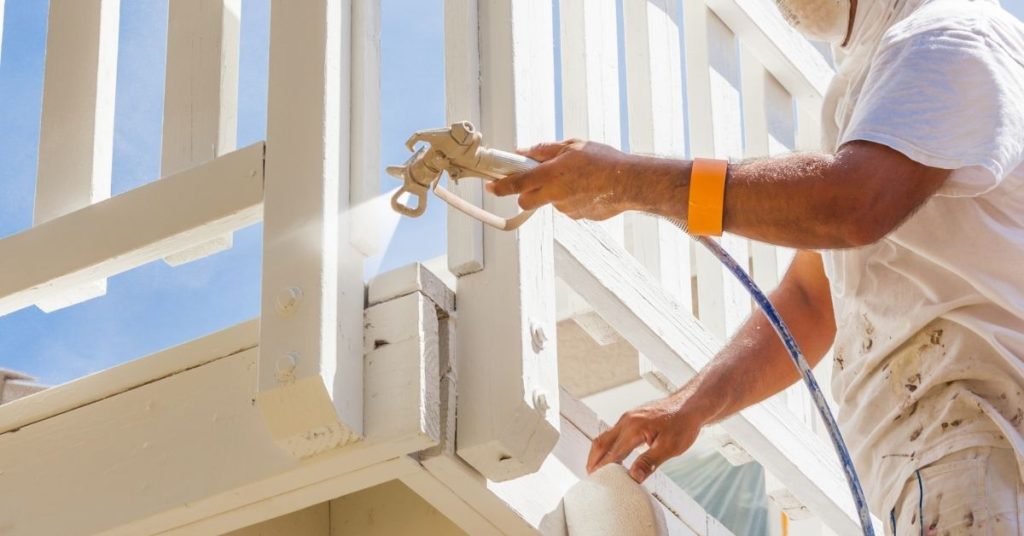
Professional painters use three main application methods. Brushes handle detail work, edges, and areas too tight for other tools. Rollers cover large flat areas quickly while leaving a nice texture.
Sprayers are fastest for big surfaces but require more masking and skill to avoid overspray. Most exterior jobs use all three. Spraying the siding, back-brushing for even coverage, then brushing the trim by hand.
Paint needs time between coats. Apply the second coat too soon, and the first coat hasn’t dried enough. You’ll get adhesion problems. Most exterior latex paints need 4 to 6 hours between coats, depending on temperature and humidity.
Full curing takes longer, about 7 to 30 days. During that time, the paint reaches its maximum hardness and durability. Avoid washing or scrubbing newly painted surfaces until fully cured.
Good painters don’t leave until everything looks right. Final inspection catches any missed spots, drips, or areas needing touch-up. All masking is carefully removed to avoid pulling fresh paint. Drop cloths get removed. Landscaping gets checked for any paint overspray. Your property should look as good or better than before the crew arrived.
Most Fremont single-story homes take 3 to 5 days for a complete exterior paint job. Two-story homes run 5 to 7 days. These timelines assume normal prep work and good weather. Complex homes with lots of trim detail take longer. Homes needing major repairs add time too.
Single-story homes are straightforward. Painters can reach most surfaces from the ground or short ladders. Two-story homes require more setup. Extension ladders, scaffolding, or lift equipment slow things down. Working at height is slower and requires more safety precautions. If you have a three-story home or steep rooflines, add even more time.
Surface condition is the biggest variable. A well-maintained home with minimal prep might finish in 3 days. A neglected home with peeling paint, wood rot, and multiple repairs could take 2 weeks to complete. Home size matters, obviously. But complexity matters more. Lots of windows, trim details, multiple colors, and architectural features all add time. The number of painters on the crew affects speed, too.
Exterior painting stops when it rains. Paint also won’t cure properly if it’s too cold (below 50°F) or too humid. Morning fog in Fremont can delay start times. Very hot afternoons in summer can cause paint to dry too fast, leaving brush marks.
Professional painters monitor weather forecasts and adjust schedules accordingly. Build some buffer time into your expectations, especially during Fremont’s rainy season from November through March.
Every home is different. That’s why paint contractors give estimates after seeing your property, not over the phone. Multiple factors combine to determine your final price.
Larger homes have more surface area to paint. Simple math. But height adds cost beyond just square footage. Two-story homes require ladders, scaffolding, or lifts. That equipment costs money to rent and slows down the work. Accessibility matters too. If painters can’t get a ladder close to certain walls due to landscaping or structures, the work takes longer.
A home with sound existing paint costs less to repaint than one with extensive peeling and wood rot. Minimal prep versus major prep is a huge cost difference. Rotted wood replacement, stucco crack repair, and lead paint abatement all add to the bill. The best way to keep costs down in the long term is regular maintenance that prevents major problems.
Premium paints cost more per gallon. But they often cover better, meaning fewer coats are needed. They also last longer, saving money over time. The type of paint matters too. Elastomeric coatings for stucco cost more than standard latex. Most exterior jobs need two coats over primer. Some situations call for three coats for the best coverage and durability.
Labor is the highest cost in any paint job. Complex prep work means more labor hours. Multiple paint colors mean more masking and careful cutting-in. Detailed trim work takes longer than simple flat siding. When comparing quotes, make sure contractors are including the same scope of prep work.
Many Fremont neighborhoods have homeowner associations with exterior paint rules. Glenmoor Gardens is one of the largest, with nearly 1,900 homes and an active design review committee that oversees house appearance, including paint colors.
Other communities, such as Vineyards-Avalon, Cameron Hills, and various condo developments, have their own HOA guidelines. If you live in an HOA community, check your CC&Rs (Covenants, Conditions, and Restrictions) before choosing colors. Most HOAs require approval before you paint.
HOA color rules exist to maintain neighborhood appearance and property values. Common restrictions include approved color palettes (usually neutral and earth tones), limits on bright or unusual colors, requirements for trim colors that complement the body color, and sometimes rules against matching your neighbor’s exact color scheme.
Some HOAs provide a booklet of pre-approved colors. Others review each request individually. The Glenmoor Gardens HOA specifically reviews any visual changes that impact the neighborhood.
Good news for Fremont homeowners: the city doesn’t require permits for standard residential painting. The Fremont Municipal Code specifically exempts painting, papering, and similar finishes from permit requirements. However, if your home was built before 1978, lead paint regulations apply. Contractors must follow EPA Lead-Safe work practices. Also, historic properties in areas like Niles may have additional review requirements before exterior changes. When in doubt, check with the city’s Community Development department.
Painting without HOA approval can lead to fines and demands to repaint at your expense. The approval process takes time, but it protects you. Submit your color choices, including the paint brand and color codes. Include samples when possible. Allow 2 to 4 weeks for review before your project starts. If you’re unsure about requirements, attend an HOA meeting or contact your property management company. A local Fremont painter familiar with HOA work can also guide you through the process.

Your home’s exterior is the first thing visitors and potential buyers see. Faded, peeling paint sends a message of neglect. Fresh, well-chosen colors say this home is cared for. In Fremont’s competitive real estate market, curb appeal matters. A quality paint job makes your home stand out on the street and in listing photos.
Color trends change, but some principles stay constant. Classic neutral colors appeal to the widest range of buyers. Blues, grays, and warm whites are currently popular in Fremont. Bold accent colors on doors and shutters add personality without overwhelming. Consider your home’s architectural style. A Victorian in Niles calls for different colors than a ranch in Glenmoor. Also, look at neighboring homes. You want to stand out just enough without clashing.
Planning to sell? Exterior painting offers one of the best returns on investment for home improvements. Real estate agents consistently recommend it. Fresh paint makes your home look newer and better maintained. It photographs well for online listings. And it signals to buyers that the home has been cared for. Time the paint job 1 to 3 months before listing for the best results.
Don’t just paint for looks. A quality exterior paint job protects your home’s structure for years. Cutting corners with cheap paint or rushed prep saves money now, but costs more later. The paint fails sooner. Wood damage develops underneath. Think of exterior painting as both maintenance and improvement. Do it right, and your home stays beautiful and protected.
This is the number one mistake. Homeowners and bad contractors rush to get paint on the wall. They skip cleaning. They paint over peeling areas. They don’t prime bare wood. The result? Paint that fails within 2 to 3 years. You end up paying to paint again when proper prep would have lasted a decade.
Paint needs the right conditions to cure properly. Too cold, and it won’t film correctly. Too hot, and it dries too fast, leaving brush marks. Rain on fresh paint is a disaster. High humidity prevents proper drying. Morning dew on surfaces causes adhesion problems. Professional painters check weather forecasts and time their work accordingly.
Interior paint on exteriors fails quickly. It’s not formulated for UV exposure and moisture. Using the wrong primer for the surface causes adhesion problems. Putting dark colors on vinyl siding warps the material. These mistakes are expensive to fix. Consult with your painter about the right products for your home’s specific surfaces.
Some homeowners wait until the paint is falling off before they repaint. By then, the underlying damage will already have begun. Regular inspections catch problems early. Touch up areas before they spread. Plan to repaint before the old paint completely fails. This proactive approach costs less over time and keeps your home protected.
Fremont’s mild climate allows exterior painting year-round. Spring (March through May) and fall (September through November) offer the most consistent conditions. Summer works too, though very hot days can be challenging. Winter is possible but risky due to rain and morning fog. Painters are typically busiest in spring and fall, so book early if that’s your target window.
Check the forecast before starting any exterior paint work. You need dry conditions for at least 24 to 48 hours after painting. Temperatures should be between 50°F and 85°F. Humidity below 85% is ideal. In Fremont, morning fog often burns off by 10 or 11 AM, allowing afternoon painting. Professional painters adjust their schedules to work with the weather, not against it.
Before the crew arrives, do some prep of your own. Trim back bushes and plants touching the house. Move potted plants and outdoor furniture away from walls. Take down screens and anything hanging on exterior walls. Clear walkways for ladder access. Tell your painter about any problem areas you’ve noticed. And let your neighbors know that work will be happening, in case noise or equipment might affect them.
Local painters understand Fremont’s specific conditions. They know which products work best in our climate. They’re familiar with HOA requirements in communities like Glenmoor Gardens. They can respond quickly if touch-ups are needed. And they have reputations in the community to protect. When you hire Fremont Painting Pros, you get a team that knows this city and takes pride in quality work.
Before the crew arrives, do some prep of your own. Trim back bushes and plants touching the house. Move potted plants and outdoor furniture away from walls. Take down screens and anything hanging on exterior walls. Clear walkways for ladder access. Tell your painter about any problem areas you’ve noticed. And let your neighbors know that work will be happening, in case noise or equipment might affect them.
Before the crew arrives, do some prep of your own. Trim back bushes and plants touching the house. Move potted plants and outdoor furniture away from walls. Take down screens and anything hanging on exterior walls. Clear walkways for ladder access. Tell your painter about any problem areas you’ve noticed. And let your neighbors know that work will be happening, in case noise or equipment might affect them.
Before the crew arrives, do some prep of your own. Trim back bushes and plants touching the house. Move potted plants and outdoor furniture away from walls. Take down screens and anything hanging on exterior walls. Clear walkways for ladder access. Tell your painter about any problem areas you’ve noticed. And let your neighbors know that work will be happening, in case noise or equipment might affect them.
Before the crew arrives, do some prep of your own. Trim back bushes and plants touching the house. Move potted plants and outdoor furniture away from walls. Take down screens and anything hanging on exterior walls. Clear walkways for ladder access. Tell your painter about any problem areas you’ve noticed. And let your neighbors know that work will be happening, in case noise or equipment might affect them.
Before the crew arrives, do some prep of your own. Trim back bushes and plants touching the house. Move potted plants and outdoor furniture away from walls. Take down screens and anything hanging on exterior walls. Clear walkways for ladder access. Tell your painter about any problem areas you’ve noticed. And let your neighbors know that work will be happening, in case noise or equipment might affect them.
Before the crew arrives, do some prep of your own. Trim back bushes and plants touching the house. Move potted plants and outdoor furniture away from walls. Take down screens and anything hanging on exterior walls. Clear walkways for ladder access. Tell your painter about any problem areas you’ve noticed. And let your neighbors know that work will be happening, in case noise or equipment might affect them.
Local painters understand Fremont’s specific conditions. They know which products work best in our climate. They’re familiar with HOA requirements in communities like Glenmoor Gardens. They can respond quickly if touch-ups are needed. And they have reputations in the community to protect. When you hire Fremont Painting Pros, you get a team that knows this city and takes pride in quality work.


